






We recommend studying our Performance Boost Tricks for MSFS guide to unlock smoother performance and a more immersive flying experience.
Microsoft Flight Simulator 2024 stands as one of the most ambitious simulation projects ever attempted in the gaming industry. It is not merely a sequel to Microsoft Flight Simulator 2020, but a broad re-architecture of the franchise that seeks to unify high-end PC simulation, console accessibility, live cloud services, and now — with its arrival on PlayStation 5 — true cross-platform reach.
The simulator’s path since launch has been complex. Its promise was enormous: a living, breathing digital Earth with deeper simulation systems, expanded activities, improved performance scalability, and wider platform support. Its execution, however, has required time, iteration, and substantial post-launch refinement. With Sim Update 4 (SU4) now available, Microsoft Flight Simulator 2024 finally feels closer to realizing its long-term vision.

A Simulator Built on Scale and Ambition
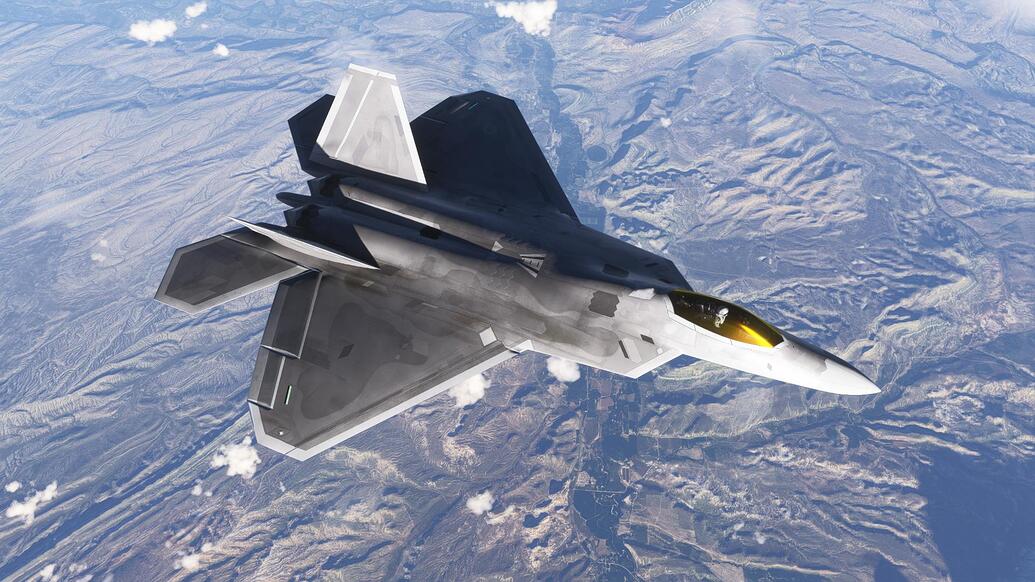
At its core, Microsoft Flight Simulator 2024 remains unmatched in scope. The simulator renders a near-complete digital twin of the Earth using satellite imagery, photogrammetry, procedural generation, and cloud-streamed data. Cities, mountains, coastlines, airports, and weather systems are dynamically represented in real time, producing an experience that feels both vast and intimate.
Visually, MSFS 2024 can be stunning. Volumetric clouds evolve organically, lighting changes with time and weather, and terrain detail stretches from handcrafted airports to remote wilderness. When everything aligns — stable servers, balanced settings, capable hardware — the simulator delivers moments of realism that feel unprecedented in consumer software.
Yet this ambition is also the simulator’s greatest challenge. The sheer volume of systems running simultaneously — terrain streaming, AI traffic, weather simulation, avionics, physics, and multiplayer services — makes optimization extraordinarily difficult. That challenge defined much of the simulator’s early post-launch life, especially through Sim Updates 2 and 3.

Aircraft Fidelity and Simulation Depth
Flight dynamics and aircraft systems remain one of MSFS 2024’s strongest pillars. Default aircraft cover a wide spectrum, from basic general aviation trainers to complex airliners and helicopters. Systems modeling has steadily improved, with avionics behaving more predictably and flight models benefiting from refinements in aerodynamics and control responsiveness.
Sim Update 4 includes a variety of aircraft-specific fixes and improvements. While many of these changes are not headline-grabbing on their own, collectively they enhance consistency and polish. Improvements to display rendering, interaction handling, and system stability reduce immersion-breaking issues that plagued earlier builds.
Helicopter simulation, in particular, continues to mature. SU4’s introduction of vortex ring state protection assistance helps mitigate unrealistic behavior during steep descents, making rotorcraft flying more approachable without stripping away challenge. This reflects a broader philosophy shift: maintaining realism while smoothing out extreme edge cases that disproportionately punished casual and intermediate users.

Sim Update 3 vs Sim Update 4: Performance Comparison
Sim Update 3 focused on stabilizing core systems and reducing certain memory and loading issues. While it did succeed in improving some crash scenarios, it also introduced new performance inconsistencies for many users. Reports of stuttering, reduced FPS, and erratic CPU usage became common, particularly in high-density areas and during IFR operations.
In many cases, SU3 felt like a transitional update — one that addressed surface-level issues without resolving deeper engine inefficiencies. For some users, performance actually regressed compared to earlier builds, leading to frustration and skepticism about the simulator’s optimization trajectory.
Sim Update 4 differs fundamentally in approach. Instead of isolated fixes, it targets how the simulator distributes workload across CPU and GPU resources. Improvements to threading, streaming, and memory management create a more balanced pipeline.
In practice, users now report fewer micro-stutters during taxi, takeoff, and approach with improved performance consistency across different aircraft types. While results still vary by hardware and settings, SU4 is the first update where a broad segment of the community agrees that performance has genuinely improved compared to SU3.

Sim Update 4: A Turning Point
Sim Update 4 is widely regarded as the most important update since launch. Rather than focusing primarily on new features, SU4 prioritizes performance optimization, stability, and system-level fixes — areas that users had been demanding attention on since Sim Update 3.
The most meaningful changes in SU4 occur under the hood:
- CPU main thread optimizations reduce bottlenecks that previously caused severe frame drops at busy airports or in dense photogrammetry areas.
- Improved texture mipstreaming and GPU memory handling reduce stutters caused by texture loading and eviction.
- Scenery culling and terrain optimizations improve frame consistency without significantly degrading visual quality.
- Reduced performance impact from AI traffic, boats, and road vehicles, helping stabilize frame pacing in complex environments.
The result is not necessarily a dramatic increase in peak frame rates for every user, but a much more important improvement: better frame consistency and smoother overall performance. Frame-time spikes — one of the most common complaints in SU3 — are noticeably less frequent in SU4.
The PlayStation 5 Release: A Major Milestone
One of the most significant developments in the MSFS franchise is the arrival of Microsoft Flight Simulator 2024 on PlayStation 5. This release marks the first time a Microsoft-branded Flight Simulator has appeared on a Sony platform — a notable moment in gaming history.
Technical Implications
The PS5 version shares the same core engine and feature set as the Xbox Series and PC versions, benefiting directly from optimizations introduced in Sim Update 4. The console’s fast SSD and unified memory architecture pair well with the simulator’s streaming-heavy design, helping mitigate some of the stutter issues seen on less optimized systems.
Visual settings on PS5 are carefully balanced to maintain performance while preserving the simulator’s signature visual identity. While PC users with high-end hardware will still enjoy greater configurability, the PS5 version delivers a surprisingly smooth and visually impressive experience given the simulator’s scale.
Expanding the Audience
The PlayStation 5 release dramatically expands the simulator’s audience. Flight simulation has traditionally been a PC-centric niche, but MSFS 2024 now spans PC, Xbox Series, and PlayStation 5, making it one of the most widely accessible high-fidelity simulators ever released.
This broader audience also places greater pressure on Microsoft and Asobo to maintain performance consistency, streamline updates, and improve onboarding — pressures that likely contributed to the optimization focus seen in Sim Update 4.

User Experience and Quality-of-Life Improvements
While performance dominates discussion, SU4 also includes numerous smaller enhancements that collectively improve usability:
- Improved UI responsiveness and visual feedback during loading screens.
- Additional display and accessibility toggles, such as seatbelt visibility options.
- Reduced visual artifacts like flickering, black water patches, and LOD anomalies.
These changes may not be dramatic on their own, but they contribute to a sense that the simulator is becoming more refined and less experimental.

Ongoing Challenges
Despite its progress, MSFS 2024 still faces challenges:
- Performance remains hardware-dependent, particularly for VR users.
- Third-party add-ons occasionally lag behind sim updates, causing compatibility issues.
- Cloud streaming reliability can still affect loading times and texture quality during peak usage.
However, the difference post-SU4 is that these issues feel more like edge cases rather than systemic problems.

Final Verdict
Microsoft Flight Simulator 2024, especially with Sim Update 4, is finally settling into the simulator it always aspired to be. While its launch and early updates were marked by instability and uneven performance, SU4 represents a genuine turning point — delivering meaningful optimizations, improved stability, and a smoother overall experience.
The comparison with Sim Update 3 highlights how far the simulator has come. Where SU3 struggled with consistency and introduced new frustrations, SU4 demonstrates a clearer understanding of the engine’s bottlenecks and how to address them.
The addition of a PlayStation 5 version further solidifies MSFS 2024 as a truly global, cross-platform simulation platform — one capable of appealing to hardcore sim enthusiasts and newcomers alike.
In its current state, Microsoft Flight Simulator 2024 is not perfect — but it is powerful, evolving, and increasingly stable. For anyone passionate about aviation, exploration, or simulation technology, it stands as the most comprehensive and immersive flight simulator available today. Finally, we recommend studying our Performance Boost Tricks for MSFS guide to unlock smoother performance and a more immersive flying experience.